That's honestly the most suitable word I can think of to describe Japan. I’m pretty sure that even Johnny Cochran couldn't make the case that I didn’t get the most out of this trip. I had an absolutely amazing time and saw some of the coolest things I could have ever hoped to see. Korea is a pretty great place, but I’ve never seen anything quite like Japan. And I didn’t even go to Tokyo or Osaka! But I definitely saw the best that the west has to offer. I visited Hiroshima, Fukuoka, Nagasaki and Kumamoto. This was in five days. I definitely made full use of my rail pass and I think I racked up somewhere in the vicinity of 1,300 miles from the time that I departed Waegwan on the 2nd to my return on the 7th. What made this trip so spectacular you might ask? Well, I’ll expand upon this in the blog, but here’s a short summary of events. I petted a deer, climbed a mountain, visited the only two cities in the world that have been destroyed by atomic bombs, toured a ghost-town, and went to two castles. Oh, and I almost forgot that I also climbed up the largest active volcano in Japan. Not a bad way to spend five days, eh?
So, without further ado, let’s embark on a journey to the Land of the Rising Sun.
February 2nd - Day 1
7:30 – Wake up - I barely slept the night before. I was pretty excited for this trip.
8:30 – Catch the train to Busan
10:30 – Arrive in Busan
11:00 – Arrive at Ferry terminal
12:30 – Depart Busan - I took the JR Beetle, which is a hydrofoil. A hydrofoil is basically a boat on water skis that rides a couple of feet above the water. This provides for a very fast and smooth ride because the boat itself does not come into contact with waves. The hydrofoil makes the journey to Fukuoka in 3 hours, while the normal ferry takes about 11 hours.
3:30 – Arrive in Fukuoka ( 福岡 ) at the Hakata Ward ( 博多区 ) - This place is a beautiful coastal city. It is noticeably warmer than South Korea and even has palm trees. One of the first things I noticed were the amazingly clean streets. The Japanese really seem to go out of their way present a beautiful image of their country.
4:30 – Arrive at Kushida-jinja ( 櫛田神社 , known as Kushida Shrine) - This shrine was founded in 757 AD and is considered the most important shrine in Fukuoka. The shrine is pretty small and is located right near downtown Fukuoka. It was also decorated for the Lunar New Year when I went to visit, so I was able to get this shot...
4:50 – Arrive at Tocho Temple ( 東長寺 ) - The last symbol in the name is "ji" and means temple, so the actual name is Tochoji. The same follows for the other temples that I visited. This place wasn't on my itinerary, but I ran into to it on my walk to Shofukuji (Shofuku Temple). This temple was built in 806 AD, making it the oldest temple in Fukuoka. It is also home to the largest wooden Buddha statue in Japan. Had I known this I would have stuck around longer, but I just stopped in to look at the grounds because it was free.
 |
| Pagoda on the temple grounds |
5:10 – Arrive at Shofuku Temple ( 聖福寺 ) - This temple was founded in 1195 AD and is the oldest Zen Temple in Japan. I didn't have too much time at this place because I had to get back to the ferry terminal to meet my friend, Andrew.
6:00 – Meet Andrew at ferry terminal
7:30 – Depart Hakata - We picked up our rail passes at Hakata Station and made our way to the Sanyō Shinkansen ( 山陽新幹線 ). The Shinkansen is Japan's bullet train and the Sanyō line runs from Hakata to Osaka. These trains go as fast as 186 mph and can make the journey from Hakata to Osaka in 2 hours and 30 minutes.
8:30 – Arrive in Hiroshima ( 広島 ) - I didn't see any of the sights at night obviously, but it was still a pretty weird feeling to be in Hiroshima.
9:30 – Arrive at Backpackers Miyajima - Our hostel for the night. Miyajima ( 宮島町 ) is the name of the town located on Itsukushima, which is an island (shima ( 島 ), which is also romanized as jima, is the Japanese word for island). This town is about 45 minutes outside of Hiroshima, but is a well known tourist destination because of Itsukushima Shrine. This hostel was really fun, but really stingy. They charged you money if you wanted to take more than a 6 minute shower. However, the staff and the other backpackers were all pretty cool. This was definitely better than any hostel I've stayed at in Korea.
10:00 – Eat and drink at the hostel
1:00 – Sleep
February 3rd - Day 2
7:30 – Wake up - I didn't have to wake up this early, but I was eager to get the day started.
8:30 – Leave hostel
8:45 – Arrive on Itsukushima ( 厳島 ) - We took a ten minute ferry ride to get to the island. The ferry provides some views of Itsukushima Shrine on the way there. The first thing I noticed on the island were the deer. The deer on the island are considered sacred so they were never hunted by humans. Therefore, the deer are not afraid of humans and actually seem very friendly. This blew me away. I had heard about this before I visited, but I was still surprised to see them everywhere around town. You weren't supposed to pet the deer, but come on. How many times am I going to get that opportunity?
 |
| I still can't believe I petted a deer |
9:30 – Visit Itsukushima Shrine ( 厳島神社 ) - This place was awesome. The shrine dates to sometime in the 6th century AD, but the current structure dates to the 16th century. So why is the shrine built over water? The island is considered to be a very sacred island and for a long time commoners were not allowed to step foot on the island. Therefore, the shrine was constructed over water to allow people to approach the island. This was definitely one of the highlights of the trip and I would recommend that anyone planning to visit Hiroshima should spend a day at Miyajima.
 |
| The torii at high tide |
 |
| Itsukushima Shrine with the five-story pagoda in the background |
10:15 – Begin the hike up Mt. Misen ( 弥山 ) - Mount Misen is the mountain on Itsukushima and is 1750 feet high. The mountain has some temples and provides awesome views of the mainland and of some of the surrounding islands. You're also bound to run into plenty of deer on the way to the top.
 |
| I've been working out |
12:00 – Reach summit - We had a beer at the top to celebrate our victory over Mount Misen. It's about a three hour round trip journey to the summit and is definitely worth the time and effort.
 |
| View from the top. I would really like to live in that house. |
1:30 – Arrive back at the bottom - We got some of the world-renowned Hiroshima oysters. Winter is actually the peak season for oysters and they were delicious. We also got to see the shrine at low tide. It's not quite as cool as high tide, but you can actually walk out to the torii.
 |
| Definitely lived up to the hype |
 |
| Torii at low tide |
3:00 – Leave Itsukushima
4:00 – Arrive at A-bomb dome and Peace Park - I had a lot of mixed emotions when visiting this place. It was great to see the thriving city that Hiroshima has become just 65 years after the bombing, but imagining the devastation that occurred left me with a sick feeling. It's impossible to truly comprehend the power of this bomb. People were literally vaporized at the areas within a half of a mile from the hypocenter. The exact number of deaths from the bomb is unknown, but estimates range from 120,000 to 200,000.
 |
| Peace flame with the A-bomb dome in the background |
7:00 – Leave Hiroshima - We got Okonomiyaki (
お好み焼き ) for dinner before we left. This dish doesn't really have any equivalent that I've seen in the west, but it is kind of a mix between a pancake and a pizza. I can't remember all of the ingredients, but some of the ones in my Okonomiyaki were shrimp, squid, green onions, and a raw egg.
 |
| Quite the concoction |
We then departed on the Nozomi (
のぞみ ), which is the fastest train in Japan. I believe its claim to fame is that it has the fastest average speed in the world between two train stations. It makes the journey from Hiroshima to Kokura, a distance of 133 miles, in 44 minutes. This translates to an average speed of 181 mph. Hakata is the next stop after Kokura. Unfortunately, the Nozomi is the only train not covered by the Japan Rail Pass.
 |
| Am I in the future? |
8:00 – Arrive in Hakata
8:30 – Leave Hakata
10:30 – Arrive in Nagasaki ( 長崎 )
11:30 – Arrive at hostel - We got a little lost along the way, but nothing too serious. We stayed at Nagasaki Ebisu Youth Hostel. It was actually more like a hotel and provided a really nice stay for the price.
1:00 – Sleep
February 4th - Day 3
7:45 – Wake up - Had to make it another early day in order to catch the 9:00 ferry to Gunkanjima.
8:30 – Leave hostel - We walked by Spectacles Bridge, which is also known as Meganebashi (
眼鏡橋 ), on the way the way to the ferry.
 |
| Looks like glasses with the reflection |
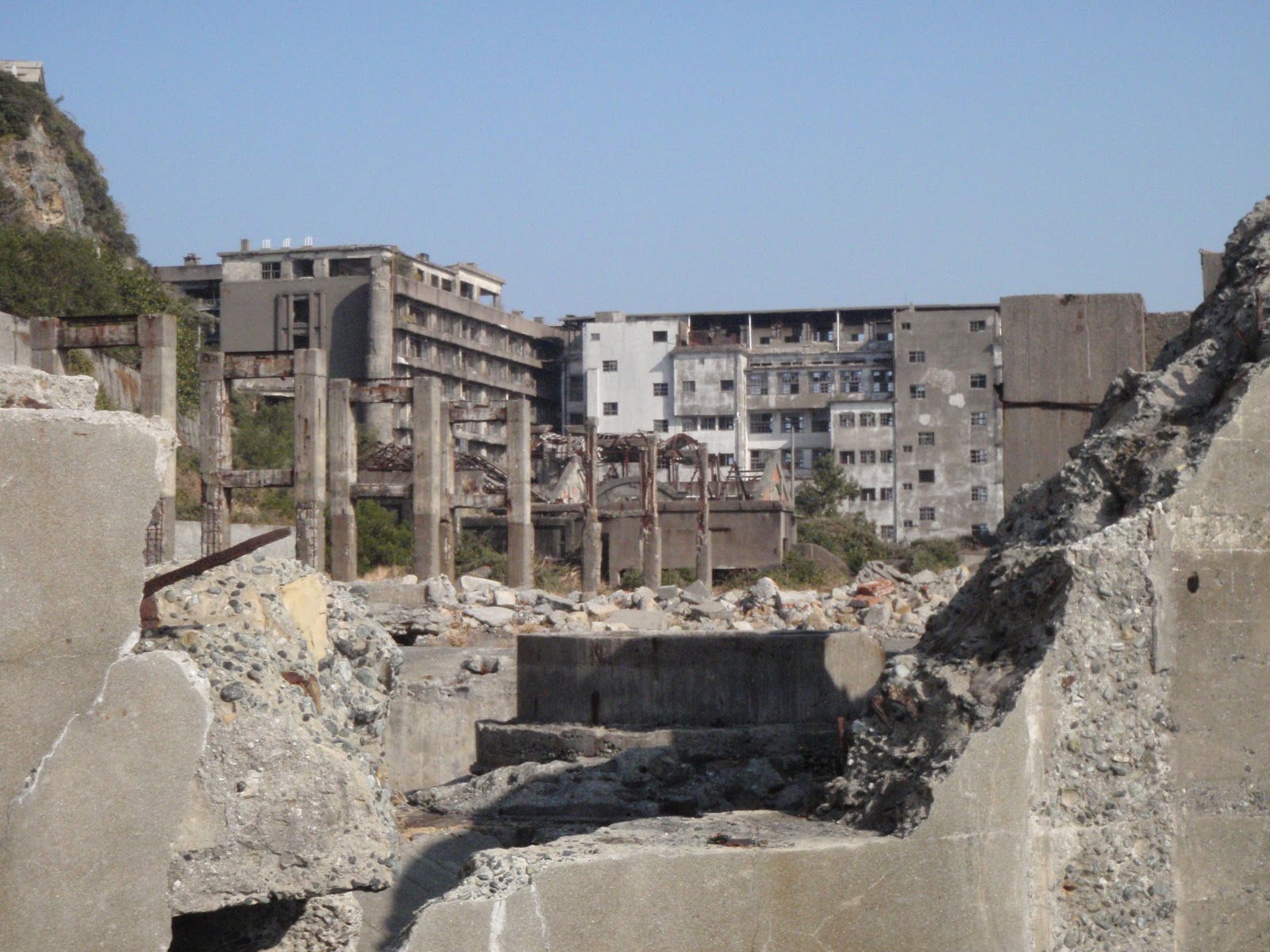
9:00 – Catch ferry to Gunkanjima ( 軍艦島 ) - Gunkanjima is actually a nickname that means "Battleship Island". The real name of the island is Hashima ( 端島 ). Also, a note for anyone who might take this tour: you have to pay in cash. We were actually 300 yen (about 3 dollars) short, but the woman at the ticket counter gave us the tickets anyway.
10:00 – Land on island - The island was used as a coal mining town from the late 1800's until it ran out of coal in 1974. It was actually the most densely populated area on earth with a density of 216,264 people per square mile. To put that in perspective, it was about three times the population density of Manhattan. However, the island has now been completely abandoned for over 35 years. I've never been to a ghost town before and I really enjoyed the tour.
 |
| The school was in the building on the right |
 |
| Can you see why they call it "Battleship Island"? |
11:00 – Leave island - The ferry provided some nice views of Nagasaki and the surrounding islands.
 |
| Nagasaki |
12:00 – Arrive back in Nagasaki - We got some food and checked out the Lantern Festival in Hamanomachi Arcade.
2:00 – Arrive at Peace Park - The Peace Statue is the most well known part of this park. His right hand points to the atomic bomb, while his left hand symbolizes eternal peace. The hypocenter monument and the Fountain of Peace are also part of the Park. We then made our way over to Urakami Cathedral (
浦上天主堂 ). This Cathedral was the largest church in East Asia at the time of the bombing, but was completely destroyed because it was located about one third of a mile from the hypocenter. The church was rebuilt in 1959 and some of the surviving artifacts from the original church are on the grounds. A piece of the original wall that was left standing is also on display next to the hypocenter monument.
 |
| Peace Statue |
 |
| Urakami Cathedral with remnants of the old Cathedral |
 |
| Hypocenter monument |
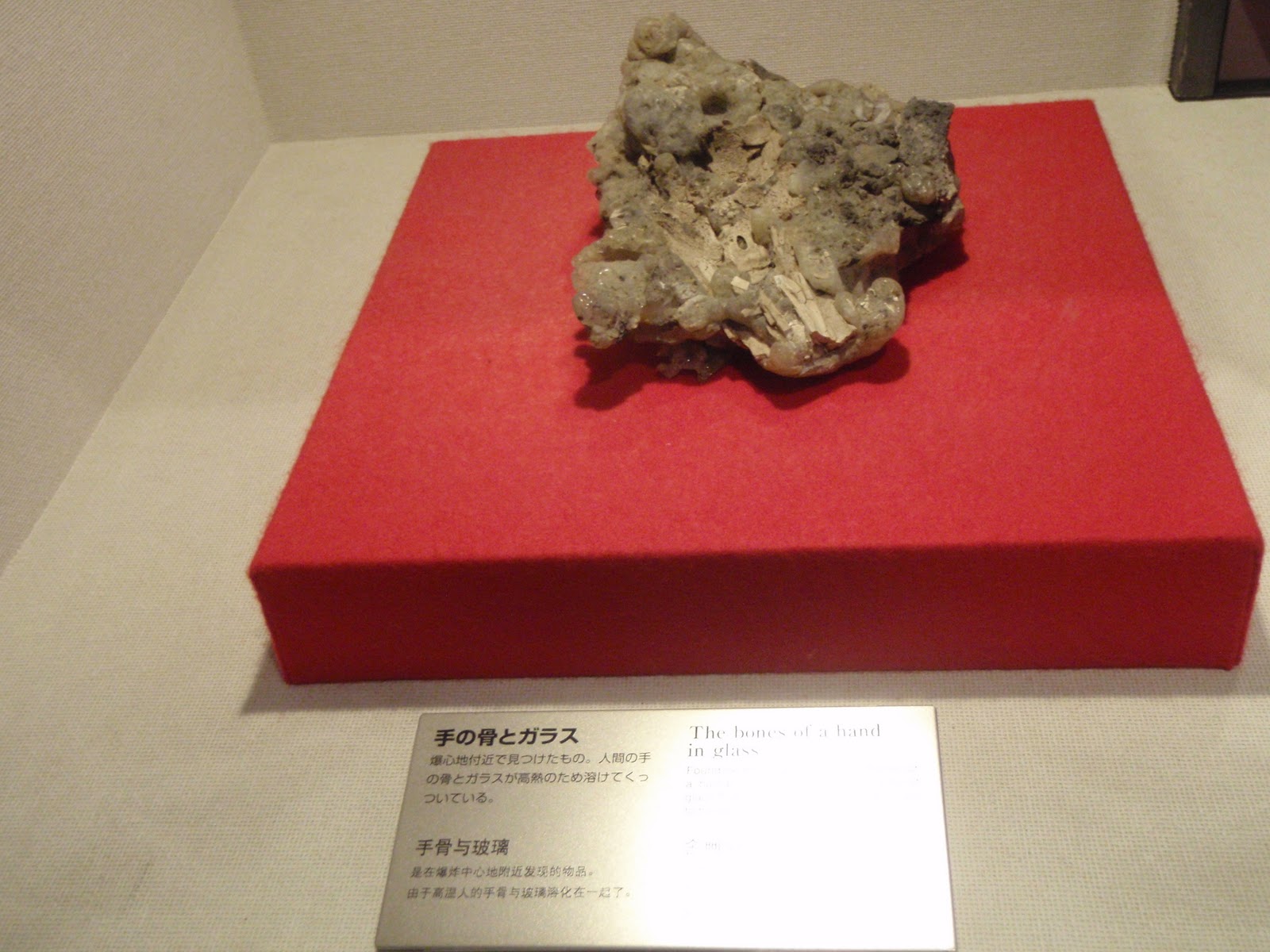
3:00 – Tour Atomic Bomb Museum ( 長崎原爆資料館 ) - Now this was just a depressing experience. Don't get me wrong, I appreciated the history, but make sure you are really ready to subject yourself to an hour or two of stories and artifacts from one of the worst tragedies of all time. Over 70,000 people died as a result of the blast and some of the pictures and stories are absolutely horrible.
 |
| A hand melted into glass |
 |
| Angel recovered from Urakami Cathedral |
 |
| Clock stopped at 11:02, the time the bomb hit |
5:00 – Arrive at Sofuku Temple ( 崇福寺 ) - This is a Zen temple that was constructed in 1629 by Chinese residents. As a result, this temple has much more Chinese influence than other temples in Japan.
 |
| Walking through the Lantern Festival on the way to the train station |
7:30 – Leave Nagasaki
9:00 – Arrive in Tosu
9:30 – Leave Tosu
10:30 – Arrive in Kumamoto ( 熊本 )
11:00 – Arrive at Dyeing and Hostel Nakashimaya - We had some very good luck with hostels. This place was a traditional Japanese style hostel, which meant sleeping on the floor. It was pretty cool because I've never stayed in a traditional Korean or Japanese hostel before.
11:00 – 1:00 – Drink and food - Kumamoto had a really cool downtown area.
2:00 – Sleep
February 5th - Day 4
8:00 – Wake up - I should have woken up a little earlier. After all, the agenda for day is a castle and a volcano. There aren't many things cooler than castles and volcanoes.
11:00 – Leave Castle
11:30 – Leave Kumamoto
12:45 – Arrive at Aso ( 阿蘇 ) - We both thought the views on the way to Aso were incredible. Little did we know how amazing the volcano was going to be.
1:30 – Catch bus to mountain - Again, we thought the views on the bus ride were even better than the views from the train. We still didn't know we were about to be blown away by this volcano (although not literally).
5:00 – Leave Mount Aso - It was tough to leave this place
6:00 – Leave Aso
7:30 – Arrive in Kumamoto
8:00 – Leave Kumamoto
9:15 – Arrive in Fukuoka
10:30 – Arrive at Hakata Riverside Hostel - Now I'm used to hostels having horrible directions, but the directions for this place were just flat out wrong. There were three sets of directions that all led to different places. But I did manage to find it eventually.
11:00 to 3:00 – Eat and drink - It was Andrew's last night, so we stayed out pretty late. We also got some late night food at a yatai, which is a food stall and one of the most well known symbols of Fukuoka.
February 6th
7:30 – Wake up - I had a lot planned for the day.
8:15 – Arrive at Hakozaki Shrine ( 筥崎宮 ) - This shrine was founded in 923 AD and is another very well known shrine in Fukuoka. I was on a pretty strict schedule so I didn't spend much time here.
10:15 – Arrive at Space World - Not really that big of an attraction. It's just a space-themed amusement park, but seeing as how it was on the way to Kokura I felt somewhat compelled to stop here.
10:45 – Depart Space World
11:00 – Arrive in Kokura ( 小倉 ) - Kokura seemed like a pretty nice city in the short time that I spent there. An interesting fact about the city is that it was actually the intended target of the atomic bomb that hit Nagasaki, but due to cloud cover the bomber was forced to move on to the secondary target.
11:15 – Visit Kokura Castle ( 小倉城 ) - This castle was originally constructed in 1602, but it burned down in 1865. Tiger paintings in the castle are very famous and were salvaged from the blaze. The castle was eventually rebuilt in 1959.
11:45 – Leave Kokura
12:00 – Arrive in Mojiko ( 門司区 ) - I actually got off at the wrong train stop so this is why I spent so much time in Mojiko. I did a lot of walkin. My main reason for going to Mojiko was to see Kanmonkyo Bridge, which is one of the longest suspension bridges in the world and connects Kyushu with the mainland.
1:30 – Depart Mojiko
3:00 – Arrive in Hakata
3:15 – Leave Hakata
3:45 – Arrive in Dazaifu ( 太宰府 )
4:00 - Visit Dazaifu Tenmangu ( 太宰府天満宮 ) - This shrine was originally constructed in 905 AD. It seemed cool, but it was absolutely packed with people. I must have gone on some kind of holiday because I've never seen a shrine in Japan or Korea with that many people.
 |
| Bridge leading to the shrine |
4:15 - Visit Kyushu National Musuem ( 九州国立博物館 ) - I didn't really care about going into the museum. I had just seen a picture of the outside and I thought it looked like a pretty awesome building.
5:00 – Arrive in Hakata
5:30 – Arrive at Fukuoka Castle Ruins - I saw the sunset here which was a pretty nice way to end the trip. At this point I was pretty tired.
6:30 – Visit Canal City - It's a huge shopping area near my hostel.
8:00 – Call it a night - I was exhausted so I just stayed in and organized everything from my trip.
12:00 – Bedtime
February 7th
7:15 – Wake up - Still a little tired, but ready to head down to the ferry terminal
7:30 – Leave hostel
8:00 – Arrive at ferry terminal
9:00 – Depart Hakata - It's been fun, Japan. I will be back in a few months and I can only hope that my second trip is as amazing as the first.
12:00 – Arrive in Busan - As much as I loved Japan, it is certainly nice to be back in Korea. It's kind of starting to feel like home.
12:45 - Leave on KTX for Dongdaegu - This was the first time I took the KTX. I guess after all the money I spent in Japan I figured what the hell. The KTX is a beautiful train, but Korea has a ways to go to catch up with Japan's rail system.
1:30 - Arrive in Dongdaegu
1:45 - Leave Dongdaegu
2:15 - Arrive in Waegwan
2:30 - Home sweet home - It felt really good to just sit down in my chair and relax after constantly being on the move for the past week.
Top 5 Things I saw on my trip
1. Mt. Aso
2. Itsukushima
3. A-Bomb Dome
4. Atomic Bomb Museum
5. Kumamoto Castle
There's Japan in five days for ya. This was possibly the best trip I've ever taken and I am really looking forward to seeing the Tokyo and Osaka regions in May. As for my traveling in Korea, I think I'm gonna take next weekend to relax a little bit and plan some future trips.